
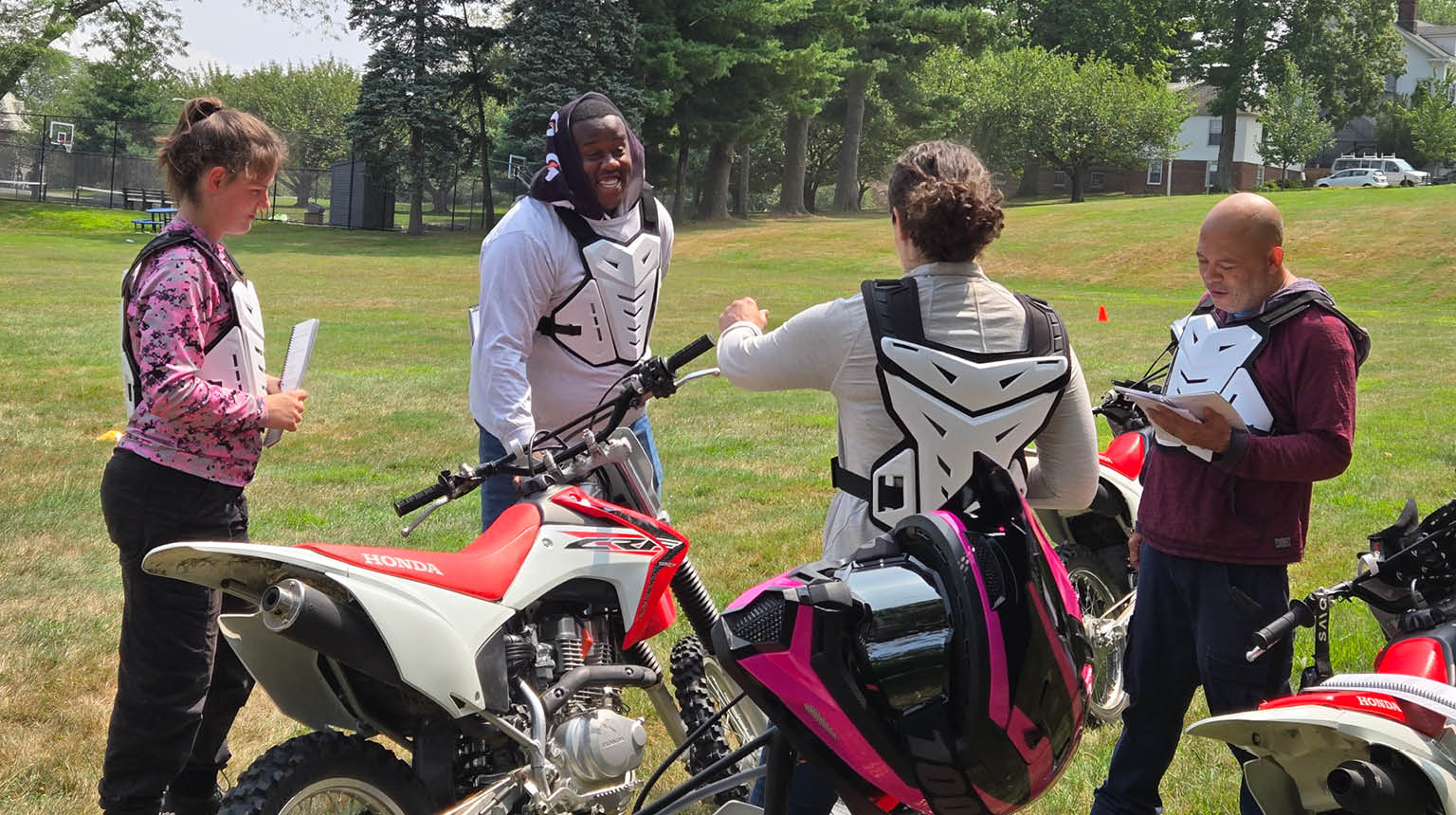
Andrus, a nonprofit residential and mental health services provider in Yonkers, New York, has expanded its therapeutic dirt bike program by training six staff members as certified Motorcycle Safety Foundation DirtBike School instructors. The move strengthens the organization’s longstanding use of motorcycles as a tool for youth development, personal growth, and behavioral health.
The R.I.D.E. program — short for Realizing Improvement through Dirtbike Education — is part of Andrus’s residential and Orchard School programs, which serve children and adolescents from across New York State. Participants learn to ride and maintain off-road motorcycles on the organization’s 110-acre campus, where instruction is integrated with broader therapeutic goals.
The program’s roots trace back to the National Youth Project Using Minibikes (NYPUM), a national initiative founded in 1969. When the NYPUM program structure ended several years ago, Andrus adapted the model under the R.I.D.E. name and continued operations independently.
Children in the R.I.D.E. program start on a dedicated range, working through the MSF curriculum before progressing to wooded trails built for the program. Each session lasts about two hours and includes both riding and hands-on learning in bike care and maintenance.
“Originally they’d just be out on the range where we teach the lessons through an MSF book,” said George Pagan, Senior Recreation Specialist. “Now we have acres of woods that we use. We have a beginner trail, an intermediate trail, and an expert trail. So once you graduate the program, you can now go through these trails in the woods that we create with the kids to work on those skills learned on the range.”
Behavioral goals are built into the curriculum. Pagan explained, “If we see kids that are struggling with fighting, we can put a formula in place for that specific case, saying, ‘Hey, you’re fighting seven days a week. If we drop it to five, you can earn some kind of time on the bikes,’ and then over time that progresses to zero fights in the week. And then you see the behavior change, because their goal is to be on the bikes — not only to ride, but learn to fix them, to learn to treat them right, put them away, get them ready for the season, replace parts.”
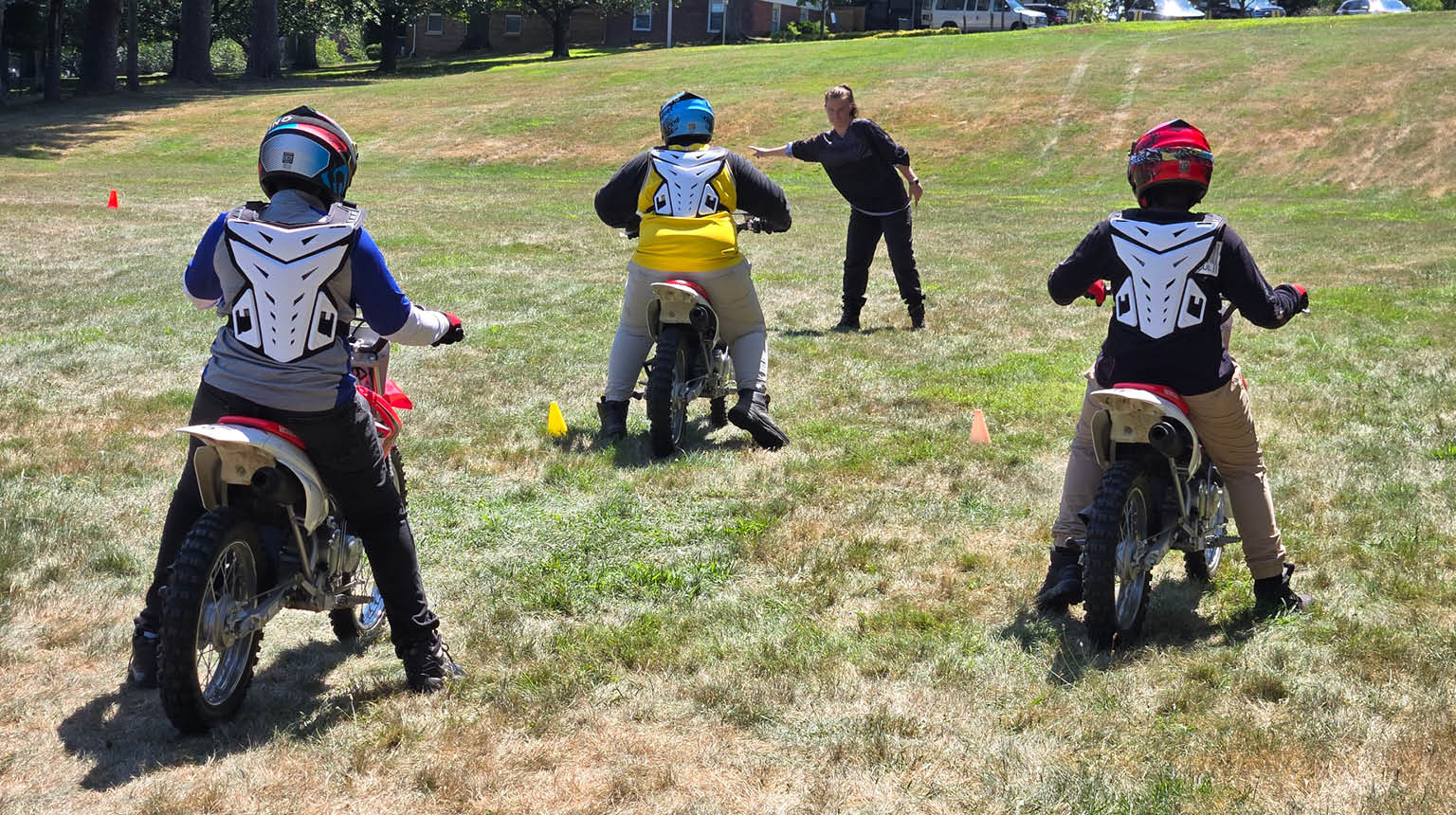
Andrus staff chose to use the MSF curriculum because of its strong reputation and established standards.
“The folks here knew of MSF because of the existing NYPUM program, but in New York, MSF is very well known,” said Patricia O’Connell, Accounting Director and one of the newly certified instructors. If you don’t want to just learn to ride on your own and then go and take a road test with some stranger, you take an MSF class, and they’re offered at a lot of the community colleges around here. So it’s well known…it’s a good partnership.”
Staff say the program delivers more than riding instruction and maintenance skills.
“There’s a significant amount of impulse control that’s required,” said Sandra Vilar-Ferreira, Clinical Director. “Because the motivation is so strong, it’s really easy to teach impulse control and patience with the motorbike, and that’s something that our children really struggle with. So it’s a nice benefit.”
O’Connell noted that group riding fosters patience and teamwork, as some children advance faster than others. “They have to have the patience and accept that other children are not at their level, so they have to work as a team, have patience, and all grow together and progress together.”
The experience also builds social connection and confidence. “To take a kid who can barely enter a room because they have so much anxiety or a deficit in social skills and put them on a motorbike is a really big thing in terms of developing ego and self-concept,” said Vilar-Ferreira. “So, in that aspect, I think it’s a really amazing therapeutic tool.”
Riding is just one part of the campus’s broader therapeutic and educational framework.
“We’re very intentional with the therapeutic programming on campus,” Vilar-Ferreira said. “So we have something for every need, or at least, we’re trying to make sure we’re hitting every need. We have animal-assisted therapy, the pool, sports, socialization, recreation. I think this (the R.I.D.E program) is kind of like one notch up. Kids aspire to get to that level…so it complements the other programs very well, but it’s also the one that the kids most aspire to.”
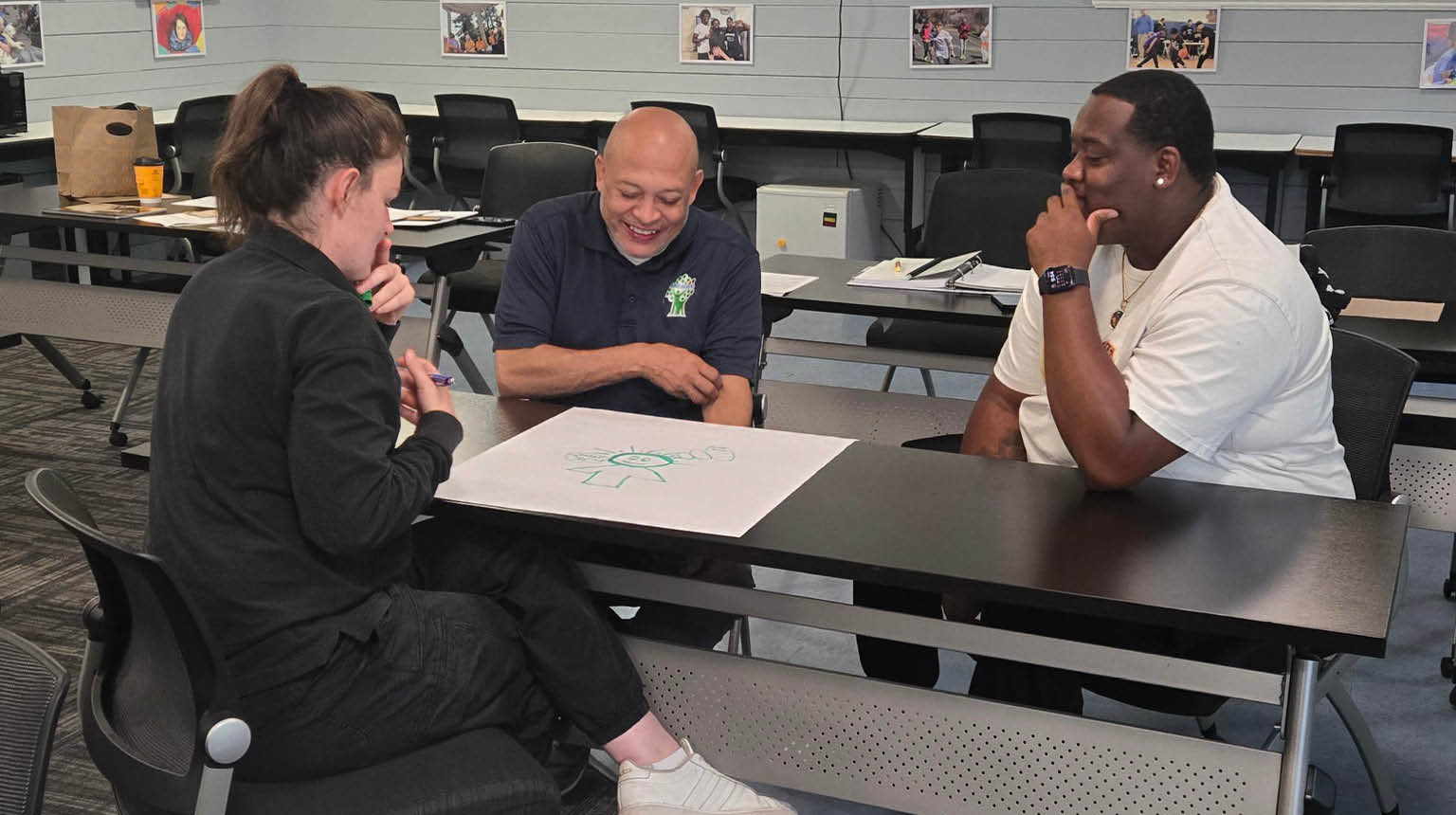
To support the program’s therapeutic focus, a group of Andrus staff recently completed four days of MSF DirtBike School instructor training, led by MSF RiderCoach Trainer Marc Gatto. He said he was impressed by the Andrus team’s dedication and experience.
“The thing that resonated with me the most from the Andrus DBS prep was the commitment and care the Coaches had for each of the students,” Gatto said. “These coach candidates had a wealth of experience in learning and development, communication styles, mentoring, motivation, and de-escalation. I took notes. They have some great approaches that are extremely applicable to coaching!”
Gatto added that while the training was demanding, the Andrus team brought a positive energy and willingness to learn. “We had a lot of fun, but they worked very hard. The first day of any coach prep can be a bit overwhelming. The leadership and staff at Andrus have a great approach to giving their students opportunities.”
“It really created a nice team environment, a learning environment,” O’Connell said. “It helped build our skills as employees here, coworkers here, and how to build off each other’s strengths and lean on each other if we have a weakness in order to help the children when we teach them.”
Andrus staff hope the program’s story will reinforce the broader value of structured recreation in youth services.
“First and foremost, I would want people to understand the power of recreation in healing,” said Vilar-Ferreira. “We can do a whole lot of therapy in an office — individual, one-on-one sessions are really valuable — but there is nothing that compares to actually teaching people how to self-soothe, regulate, develop skills to cope, and then teaching people how to play and interact with others and be able to build agency within themselves. When you put someone on a dirt bike, it just kind of elevates all of those skills to a whole different level. There’s a tremendous amount of therapeutic healing that happens in teaching someone to ride a dirt bike.”
For the program to continue and expand, the organization needs outside support.
“It requires us having partners, partners who are willing to donate, to invest funds in the work that we’re doing with our youth,” said Corine Lurry-Mabin, Andrus’s President and CEO. “The course requires upkeep and maintenance, and so we need partners to support us with that, because we can’t do it alone. It requires what we know as an organization: that healing comes in a community. Our community is not just the Andrus staff and families, but it’s the partners and the connections outside of this campus that support with the healing and transformation of our youth.”
The involvement of MSF-certified instructors helps ensure that the program meets established standards for safety and skill development. Rob Gladden, Vice President of Training Operations at MSF, noted the broader impact such programs can have.
“We know that riding can be a powerful tool for building confidence, responsibility, and connection,” Gladden said. “Seeing the MSF curriculum used to make a real difference in young people’s lives is exactly why we do this work. We’re proud to see organizations like Andrus help kids grow and thrive through responsible off-road education.”
In celebration of the United States’ 250th anniversary, MSF is inviting stories from across the country that showcase motorcycle safety and rider training. If you’d like to contribute, email mediarelations@msf-usa.org.